




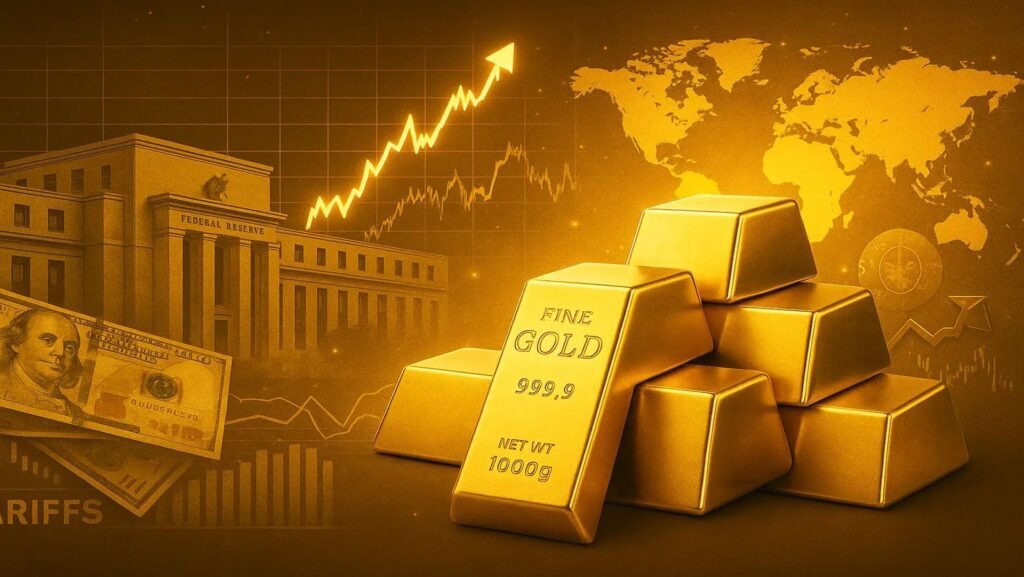
Gold has always been more than just a precious metal—it’s a safe haven, an emotion, and a long-term wealth protector. As global markets continue to swing between uncertainty and optimism, investors are once again asking two big questions:
Where is gold heading this week? And what could gold prices look like in 2026?
Let’s break it down in a clear, practical, and human way.
Gold Price Outlook This Week: What’s Driving the Market?
This week, gold prices are showing cautious strength, supported by global economic uncertainty and central bank signals. Several short-term factors are influencing gold’s movement right now:
🔹 1. US Dollar & Interest Rates
Gold typically moves opposite to the US dollar. Any sign of dollar weakness or expectations of interest rate cuts tends to push gold prices higher. With inflation still being closely monitored, even small policy hints can move the gold market quickly.
🔹 2. Global Geopolitical Tensions
Ongoing geopolitical tensions continue to keep investors on edge. Historically, whenever uncertainty rises—whether due to conflicts, trade tensions, or political instability—gold attracts fresh buying interest.
🔹 3. Central Bank Gold Buying
Central banks around the world have been consistently increasing their gold reserves. This steady institutional demand adds a strong support base for prices, even during short-term corrections.
📈 Short-Term View
If current momentum holds, gold may head towards a higher resistance zone in the near term, especially if inflation data or global cues remain supportive. However, profit booking at higher levels is also possible, so volatility should be expected.
Gold Price Prediction for 2026: The Bigger Picture
Looking beyond weekly charts, the long-term outlook for gold remains constructive and optimistic.
🔮 Why 2026 Could Be Strong for Gold
Here are the major reasons analysts remain bullish on gold over the next two years:
✔ Persistent Inflation Risks
Even if inflation moderates, it may remain structurally higher than past decades. Gold traditionally performs well in such environments.
✔ Growing Global Debt
Rising government debt levels across major economies increase concerns over currency stability—another positive factor for gold.
✔ De-Dollarization Trend
Several countries are actively reducing reliance on the US dollar for trade and reserves. Gold plays a key role in this shift.
✔ Long-Term Investor Confidence
Gold continues to be seen as a hedge against financial crises, making it attractive for long-term portfolio allocation.
📊 2026 Gold Price Outlook
If current global trends continue, gold prices could remain on an upward trajectory through 2026, with periodic corrections along the way. Long-term investors may view dips as buying opportunities rather than reasons for panic.
Should Investors Buy Gold Now?
The answer depends on your strategy:
-
Short-term traders should closely watch technical resistance levels and economic data.
-
Long-term investors may consider gradual accumulation, especially during price dips.
-
Risk-averse investors can use gold as portfolio insurance rather than a speculative asset.
Gold works best when seen as a stability tool, not a get-rich-quick trade.
Final Thoughts
Gold’s strength lies in its ability to perform when confidence in other assets weakens. While short-term movements may remain volatile, the 2026 outlook suggests gold could stay resilient and potentially move higher amid global economic shifts.
Whether you’re watching this week’s price action or planning for the next few years, gold remains a metal worth paying attention to.
📌 Disclaimer
This article is for informational purposes only and should not be considered financial advice. Always consult a certified financial advisor before making investment decisions.