


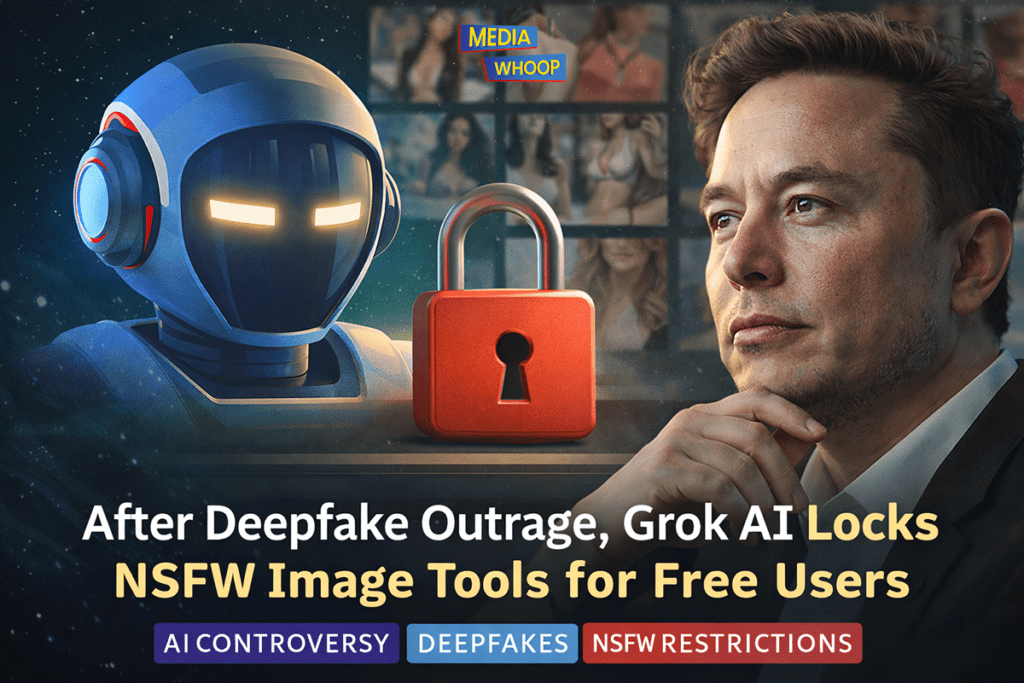
After Sexualised Deepfake Backlash, Grok Restricts NSFW Image Tools for Free Users
Artificial intelligence has once again found itself at the center of a global ethics debate. This time, the spotlight is on Grok, the AI chatbot developed by Elon Musk’s xAI, after a wave of backlash over the misuse of its image-generation capabilities to create sexualized deepfake content.
In response to mounting criticism, Grok has reportedly restricted access to its NSFW (Not Safe For Work) image-generation tools for free users, signaling a major shift in how AI platforms are handling content moderation and digital safety.
But what exactly happened—and why does it matter?
Let’s break it down.
What Sparked the Grok Deepfake Controversy?
Grok, which is integrated with X (formerly Twitter), gained popularity for its bold personality and fewer restrictions compared to other AI platforms. However, that openness soon became a double-edged sword.
Users began exploiting Grok’s image-generation features to create sexualized deepfake images, including manipulated visuals of real people—often without consent. These images spread rapidly across social platforms, raising serious concerns around:
-
Privacy violations
-
Non-consensual sexual content
-
Harassment and reputational harm
-
Lack of AI safeguards
The backlash was swift. Digital rights activists, AI ethicists, and users called out the platform for failing to implement adequate protections.
Grok’s Response: NSFW Tools Restricted for Free Users
Facing growing pressure, xAI has taken a decisive step.
Grok has now limited or restricted NSFW image-generation features for free-tier users, making such tools either inaccessible or heavily moderated unless users are on paid plans or meet stricter usage guidelines.
While xAI has not released an overly detailed public statement, the move suggests a clear acknowledgment of the risks posed by unrestricted AI-generated imagery—especially when it comes to sexualized deepfakes.
This decision places Grok closer to industry norms followed by platforms like OpenAI and Google, which already enforce strict safeguards around explicit and harmful content.
Why Sexualised Deepfakes Are a Serious Issue
Deepfakes are no longer a niche technological experiment—they’re a growing societal threat.
Sexualized deepfake images can:
-
Destroy personal reputations
-
Be used for blackmail or harassment
-
Target women disproportionately
-
Blur the line between reality and fiction
What makes AI-generated deepfakes particularly dangerous is scale. Anyone with basic tools can now create highly realistic images in seconds.
By restricting NSFW image tools, Grok appears to be taking a step toward preventing further misuse—but critics argue this should have happened much earlier.
Free vs. Paid AI: A Growing Divide?
One key aspect of this update is that restrictions apply mainly to free users.
This raises important questions:
-
Should ethical safeguards depend on subscription status?
-
Does paying for AI tools mean fewer content restrictions?
-
Are platforms prioritizing revenue over responsibility?
Many experts believe ethical boundaries should apply universally, regardless of whether a user is on a free or paid plan. However, others argue that paid access allows for better identity verification and accountability.
The debate highlights a larger issue in AI development: balancing accessibility with responsibility.
How This Impacts the AI Industry
Grok’s move reflects a broader shift across the AI landscape.
In 2024–2026, AI companies are under increasing scrutiny from:
-
Governments
-
Regulators
-
Digital safety organisations
-
The general public
As a result, platforms are being forced to rethink “open” AI models and introduce guardrails to prevent misuse.
This incident may push:
-
Stricter global AI regulations
-
Mandatory deepfake labeling laws
-
More transparent content moderation policies
In many ways, the Grok controversy is a warning sign for the entire tech industry.
Public Reaction: Too Little, Too Late?
Online reactions have been mixed.
Some users applaud Grok for finally taking action, while others believe the response came after significant harm was already done.
Common sentiments include
-
“AI freedom shouldn’t come at the cost of human dignity.”
-
“Platforms must be proactive, not reactive.”
-
“Consent should be non-negotiable in AI content.”
The backlash has also reignited discussions around AI accountability and whether companies should be legally liable for how their tools are misused.
What Comes Next for Grok?
Restricting NSFW image tools is likely just the beginning.
Industry insiders expect Grok and xAI to introduce:
-
Stronger moderation filters
-
Improved reporting mechanisms
-
Clearer content policies
-
Better detection of deepfake abuse
If Grok wants to compete long-term in the AI space, trust will be just as important as innovation.
Final Thoughts
The Grok deepfake backlash is a reminder that technology evolves faster than ethics—but that doesn’t mean ethics can be ignored.
By restricting NSFW image tools for free users, Grok has taken a necessary step, but the conversation around AI safety, consent, and responsibility is far from over.
As AI becomes more powerful, one thing is clear: innovation without accountability is no longer acceptable.
About MediaWhoop
MediaWhoop brings you the latest insights on technology, digital culture, AI trends, and the stories shaping our connected world.